How to pray salah, step by step
9 min read
Short answer
Every prayer is built from the same repeating unit, called a rakah: stand and recite, bow, stand up again, then prostrate twice. You repeat that unit two, three or four times depending on the prayer, sit for the Tashahhud, and finish by giving salam to your right and left.
Fajr is 2 rakahs, Dhuhr 4, Asr 4, Maghrib 3 and Isha 4. Learn one rakah properly and you can pray all five.
Salah looks complicated from the outside, but it is one short sequence repeated a set number of times. Once you can pray a single rakah confidently, every one of the five daily prayers is within reach, because they differ only in how many rakahs they contain and whether the recitation is aloud or silent.
What follows is the full sequence, illustrated. Use the toggle to switch between the men's and women's illustrations.
Before you begin
- Be in a state of wudu. Prayer is not valid without it. If you are unsure whether yours is still valid, see what breaks your wudu.
- Make sure the prayer time has entered. Each prayer has a window, and praying before it opens does not count.
- Face the qibla, the direction of the Kaaba in Mecca.
- Cover the body appropriately and pray somewhere clean.
- Form the intention for the specific prayer you are praying. This is held in the heart and does not need to be spoken.
The sequence, step by step
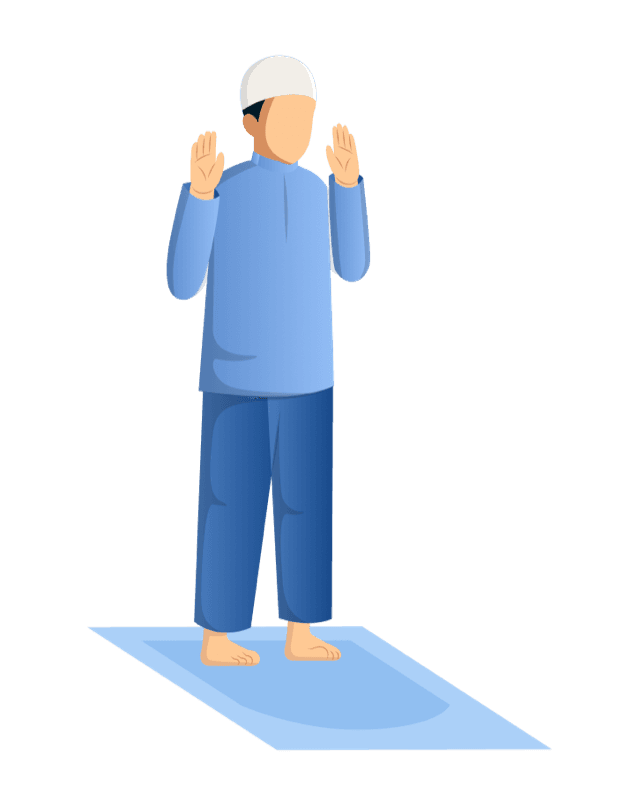
Step 1
Takbiratul Ihram
Face the qibla, make the intention in your heart for the prayer you are about to offer, raise your hands and say Allahu akbar. From this moment you are in the prayer and ordinary speech and movement are no longer permitted.
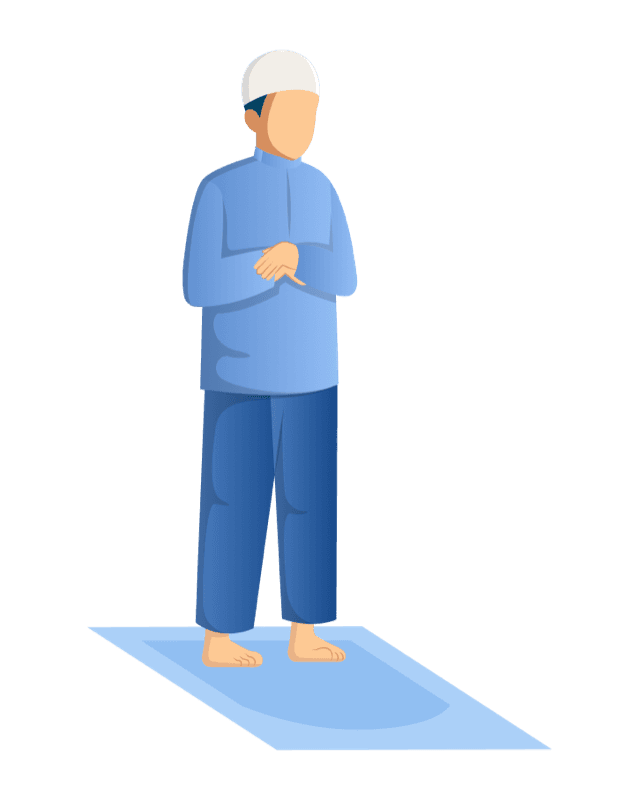
Step 2
Qiyam: standing and reciting
Place your hands on your body and recite Surah Al-Fatiha. In the first two rakahs, follow it with another passage of the Qur'an. Keep your gaze at the place of prostration.
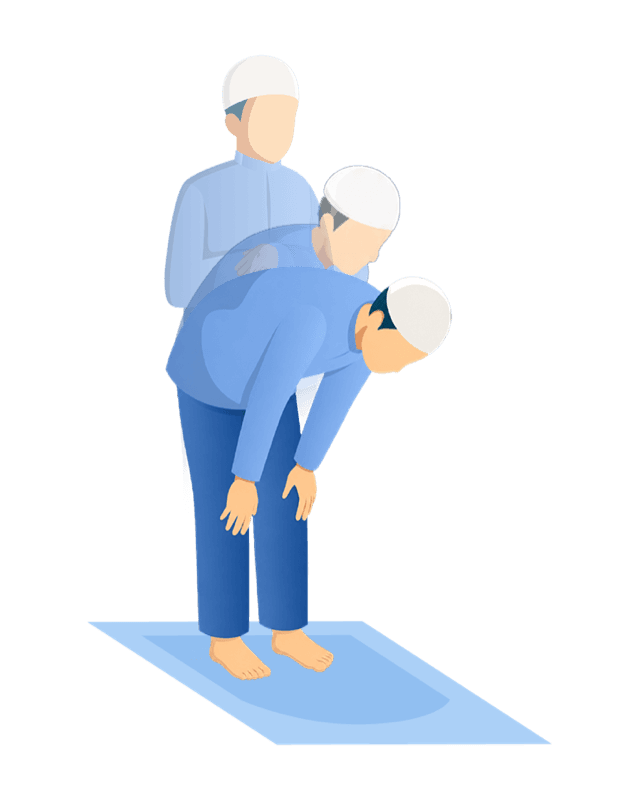
Step 3
Takbir into ruku
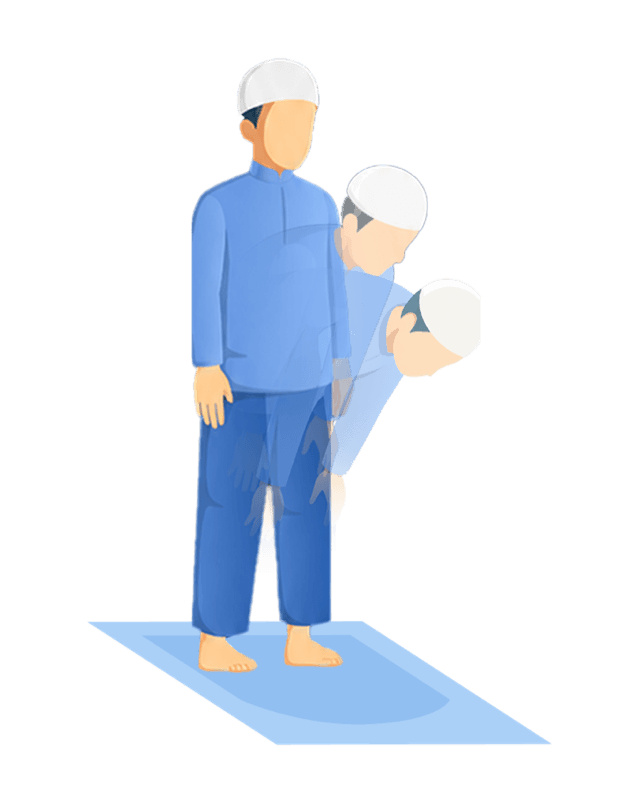
Say Allahu akbar and begin to bow. Each change of position in the prayer is marked by a takbir, apart from rising from ruku.
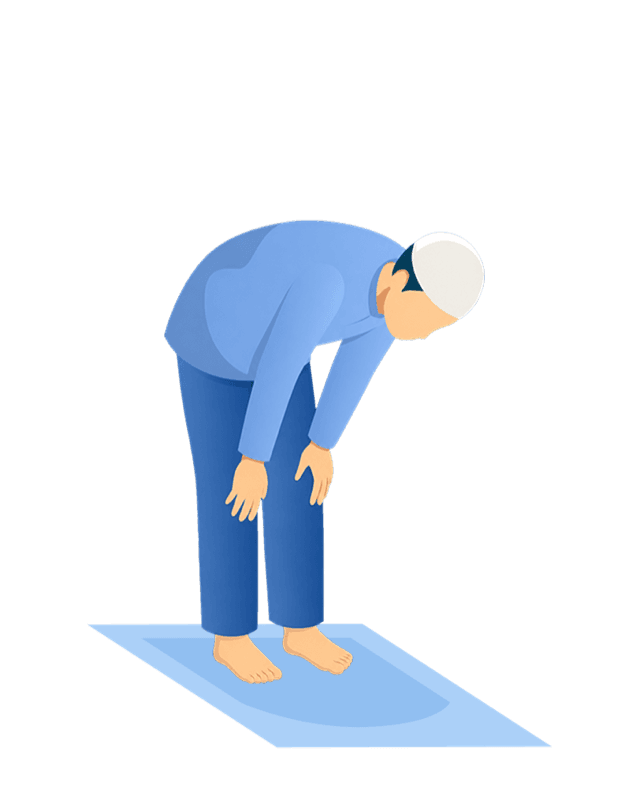
Step 4
Ruku: bowing
Bow with your back level and your hands on your knees, fingers spread. Say Subhana rabbiyal adheem, glory to my Lord the Most Great, three times. Settle into the position before moving on.
Step 5
Rising from ruku
Straighten up saying Sami Allahu liman hamidah, Allah hears the one who praises Him. This is the one movement announced with these words rather than a takbir.
Step 6
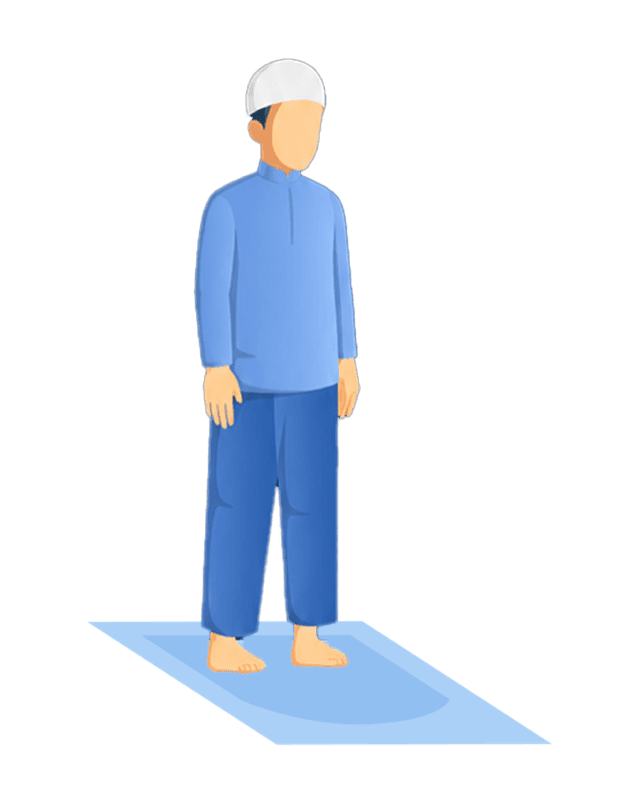
Itidal: standing upright
Stand completely upright and still, and say Rabbana wa lakal hamd, our Lord, to You belongs all praise. Do not rush from bowing straight into prostration.
Step 7
Takbir down to sujud
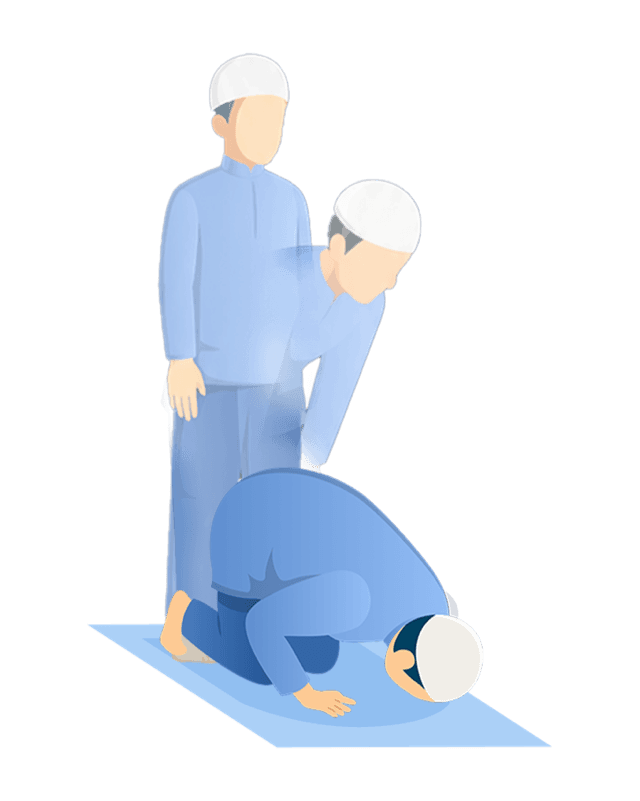
Say Allahu akbar and lower yourself to the ground for prostration.

Step 8
Sujud: prostration
Prostrate on seven points: the forehead together with the nose, both palms, both knees, and the toes of both feet. Say Subhana rabbiyal a'la, glory to my Lord the Most High, three times.
Step 9
Rising to sit
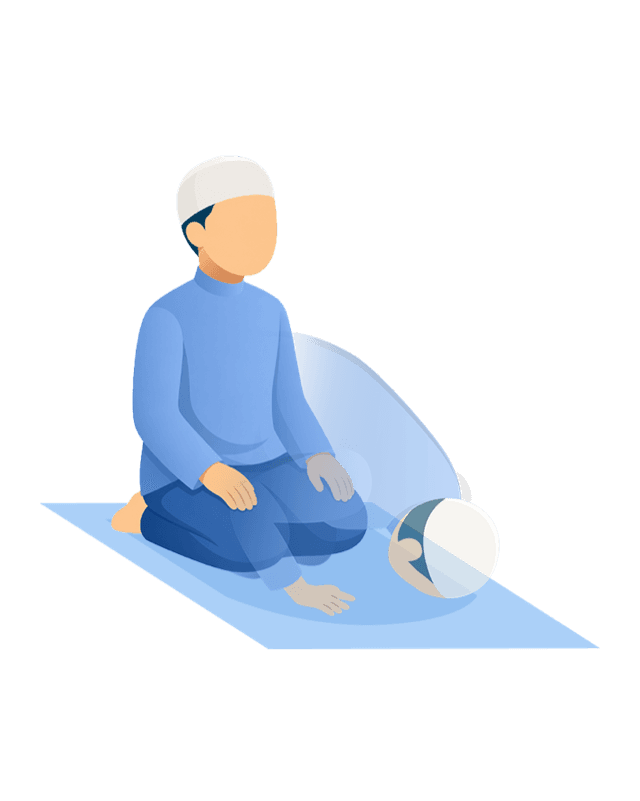
Say Allahu akbar and sit up from prostration.

Step 10
Sitting between the two prostrations
Sit calmly and say Rabbighfir li, my Lord forgive me. Do not hurry through this sitting, it is part of the prayer rather than a pause between parts.
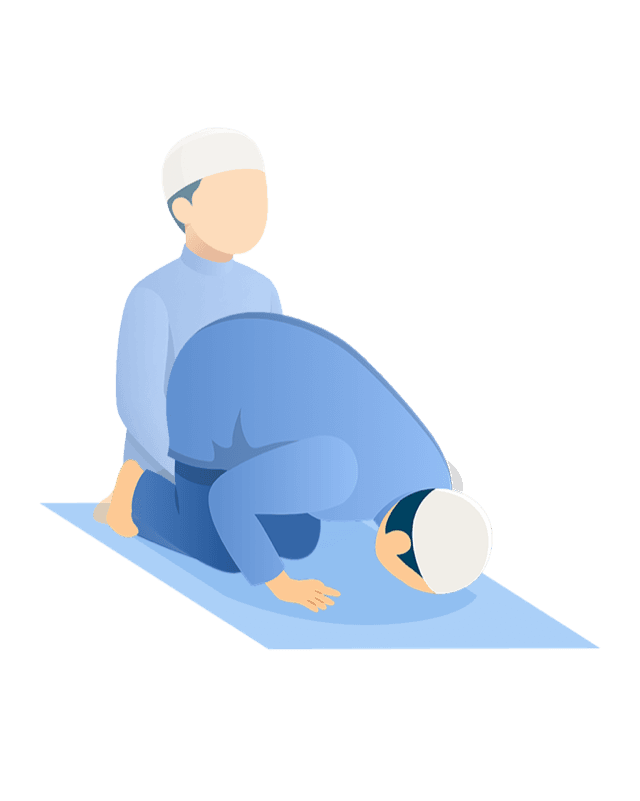
Step 11
Takbir to the second sujud
Say Allahu akbar and prostrate a second time exactly as you did the first, repeating Subhana rabbiyal a'la three times.
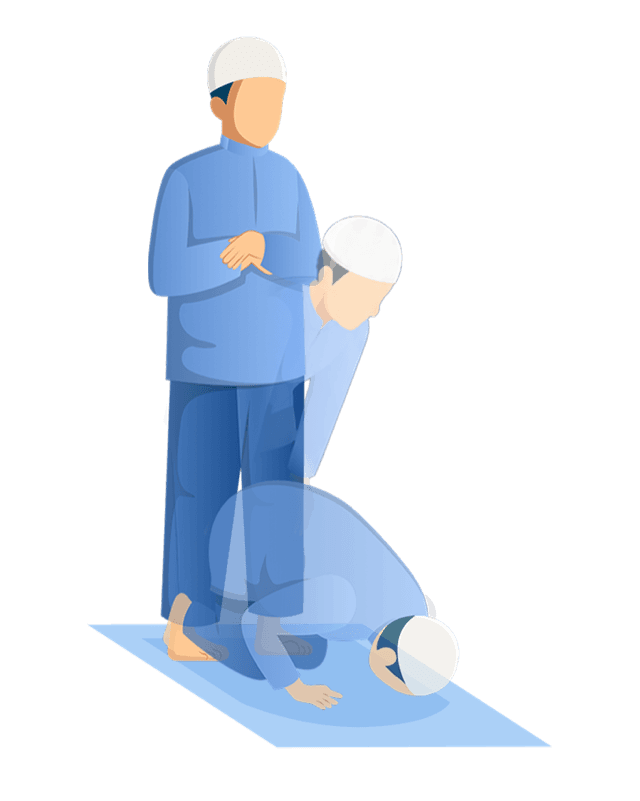
Step 12
Standing for the next rakah
Say Allahu akbar and rise to stand. That completes one rakah. Begin the next one at the recitation of Al-Fatiha.

Step 13
Sitting for the Tashahhud
After the second rakah, and again at the end of the prayer, sit and recite the Tashahhud. At the final sitting, follow it with the salawat on the Prophet ﷺ.

Step 14
Raising the index finger
While reciting the Tashahhud, raise the index finger of your right hand at the testification of faith, a gesture affirming the oneness of Allah.
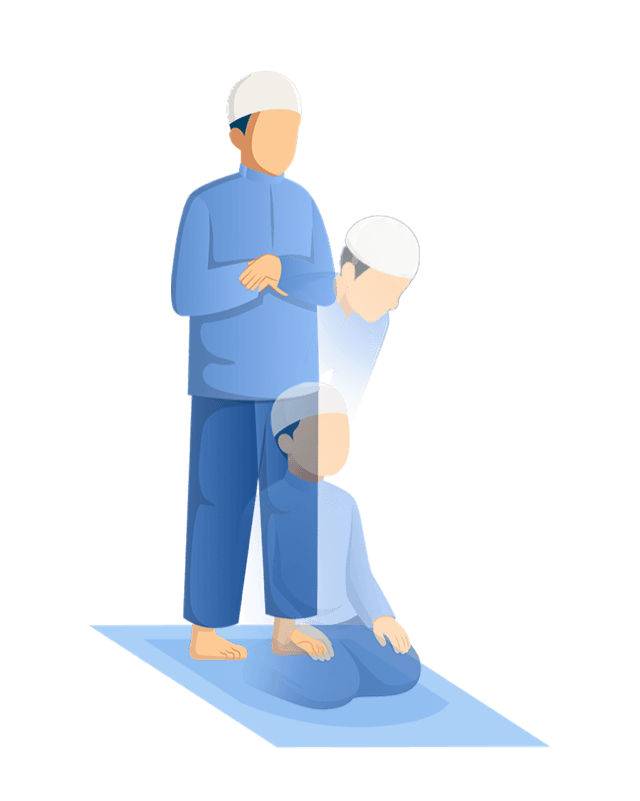
Step 15
Rising for a third or fourth rakah
In prayers of three or four rakahs, say Allahu akbar after the first Tashahhud and stand again. In these later rakahs you recite Al-Fatiha only, without a second passage.

Step 16
Tasleem to the right
Turn your head to the right and say Assalamu alaykum wa rahmatullah, peace and the mercy of Allah be upon you.

Step 17
Tasleem to the left
Turn your head to the left and repeat the greeting. The prayer is now complete.
Where the schools differ on hand placement
This is the most visible difference between people praying side by side, and it is worth knowing that all of these positions are valid within their school.
What the four schools say
Where do you place your hands while standing?
Each school derives its position from authentic narrations. Praying in the manner of your school, or the community you pray with, is sound.
How many rakahs for each prayer
The sequence above is one rakah. Here is how many times you repeat it:
- Fajr: 2 rakahs, recited aloud
- Dhuhr: 4 rakahs, recited silently
- Asr: 4 rakahs, recited silently
- Maghrib: 3 rakahs, first two aloud
- Isha: 4 rakahs, first two aloud
For the sunnah prayers offered alongside these, and the witr prayer, see how many rakahs is each prayer.
The most common mistake
Rushing. A man once prayed hurriedly in front of the Prophet ﷺ, who told him to go back and pray again, three times over, before teaching him to settle into each position until his limbs came to rest. Bowing, standing up from bowing, prostrating and sitting between prostrations each need a moment of stillness. A prayer performed calmly in five minutes is worth more than one rushed through in ninety seconds.
What to do next
Learn the sequence in order, one position at a time, rather than trying to memorise everything at once. Most people find the Arabic settles within a couple of weeks of praying daily. If you are returning to prayer after time away, start with the next prayer due rather than trying to account for everything at once, and read how the prayer windows work so you know what you are aiming for.
Common questions
›Do men and women pray differently?
The movements are the same. The schools differ on small details of posture: the majority hold that a woman draws herself in more closely in bowing and prostration and sits differently, while the Hanafi school describes a distinct sitting position for women. The obligatory parts of the prayer are identical for both. The illustrations above show both.
›What do I do if I forget a step?
If you leave out something obligatory or add an extra movement by mistake, you perform sujud as-sahw, two extra prostrations before or after the tasleem, and the prayer is valid. If you miss a whole rakah you stand and complete it before the tasleem.
›How much of the Qur'an do I need to know to start praying?
Surah Al-Fatiha is recited in every rakah, so that is the priority. Beyond it, any short surah you have memorised is enough for the first two rakahs. Someone new to Islam who has not yet memorised Al-Fatiha should pray while learning it, and scholars permit reciting what they can in the meantime.
›Can I pray sitting down?
Yes, if standing is not possible. The Prophet ﷺ said to pray standing, and if you cannot then sitting, and if you cannot then lying on your side. Illness, injury or genuine inability are valid reasons, and the prayer is complete, not deficient.
Sources referenced
- Qur'an 2:238, 4:103, 17:78 on the prayer and its appointed times.
- Sahih al-Bukhari 631: "Pray as you have seen me praying."
- Sahih al-Bukhari 793 and Sahih Muslim 397, the hadith of the man who prayed badly, on tranquillity in each position.
- Sahih al-Bukhari 812 on the seven points of prostration.
Where the schools of thought differ we have given each position rather than choosing one. For a ruling on your own situation, ask a qualified scholar in your community.
Put it into practice
Just Pray has this guide built in, with prayer times for your location, reminders, and a tracker so you never lose your place. Free on iOS and Android.