How to perform wudu, step by step
7 min read
Short answer
Wudu is: intention, then wash the hands, rinse the mouth, rinse the nose, wash the face, wash the arms to the elbows, wipe the head, wipe the ears, and wash the feet to the ankles. The washing steps are done three times each, the wiping once.
Four of those are obligatory because the Qur'an names them: washing the face, washing the arms to the elbows, wiping the head, and washing the feet to the ankles. The rest are sunnah, which means your wudu is valid without them but incomplete in reward.
Wudu is the ablution that prayer depends on. Without it the prayer is not valid, which is why it is the first thing a new Muslim, or someone returning to prayer, needs to get right. It takes about two minutes and the sequence quickly becomes automatic.
The full method below is the one described by the Prophet's companions when they were asked to show people how he purified himself. Use the toggle to switch between the men's and women's illustrations.
The four obligations, and everything else
It helps to separate two categories before you start. The obligatory parts, called fard, are the ones without which the wudu simply has not happened. The Qur'an names four of them: washing the face, washing the arms up to the elbows, wiping the head, and washing the feet up to the ankles.
Everything else in the sequence, saying Bismillah, washing the hands first, rinsing the mouth and nose, wiping the ears, working between the fingers and toes, and starting with the right, is sunnah. These are how the Prophet performed it, and leaving one out does not invalidate the wudu, but the complete method is what you should be aiming for.
The sequence, step by step

Step 1
Form the intention
Intend in your heart that you are purifying yourself for the sake of Allah. It is held in the heart and does not need to be said aloud. Begin by saying Bismillah, in the name of Allah.

Step 2
Wash the hands to the wrists, three times
Start with the right hand, then the left, washing up to and including the wrists and working the water between the fingers. This is a sunnah of wudu rather than one of its obligations, and it is how the Prophet's wudu is described in the narrations of his companions.

Step 3
Rinse the mouth, three times
Take water into the mouth with the right hand, swirl it around, and expel it. If you are not fasting, rinse thoroughly. Use a tooth stick or brush beforehand if you can, as the Prophet encouraged the siwak before purification and prayer.

Step 4
Rinse the nose, three times
Draw water into the nostrils with the right hand and blow it out with the left. Again, do this gently while fasting so that water does not pass beyond the nose.

Step 5
Wash the face, three times
Wash the whole face once from the hairline to the underside of the chin, and from ear to ear. This is the first of the four obligations named in the Qur'an, so make sure no part of the face is left dry.
Step 6
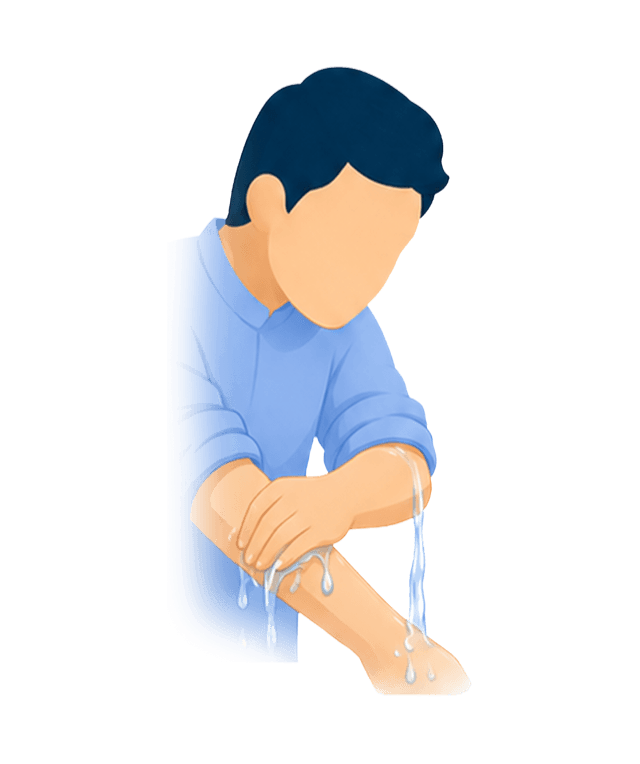
Wash the arms to the elbows, three times
Wash the right arm from the fingertips up to and including the elbow, then the left. The elbow itself is included. This is the second obligation, and a common mistake is to stop short of the elbow or leave a dry patch on the forearm.

Step 7
Wipe the head
Wet your hands, then pass them over the head. This is a wipe, not a wash, and it is done once. How much of the head must be wiped is the main point on which the schools differ, and the table further down sets out each position.

Step 8
Wipe the ears
With the same wetness, put your index fingers inside the ears and wipe behind them with your thumbs. The Hanbali school treats the ears as part of the head and so as part of the obligation. The other schools treat wiping them as a sunnah.
Step 9
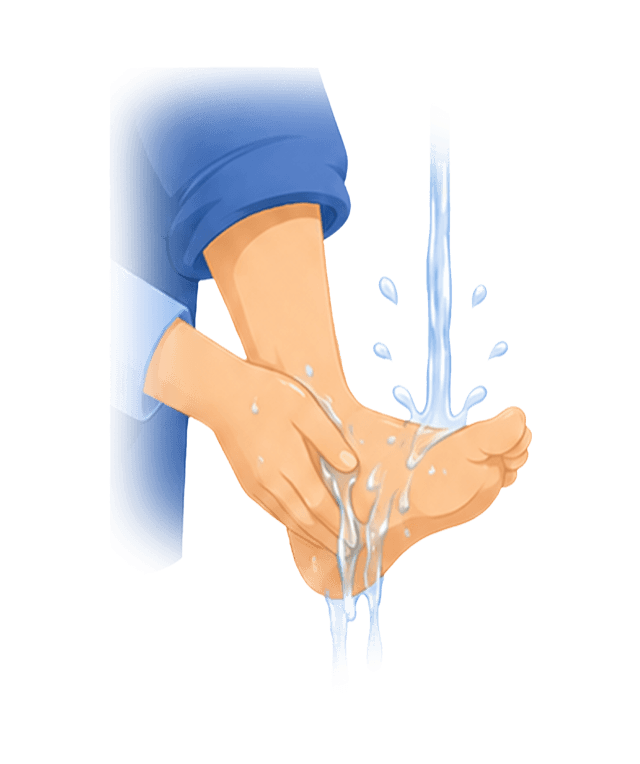
Wash the feet to the ankles, three times
Wash the right foot up to and including the ankle, then the left, passing a finger between the toes. The heels and the edges of the feet are easily missed, and the Prophet warned of the Fire for heels left dry. Your wudu is now complete.
Where the schools differ
Four points of genuine difference are worth knowing, because they change what you are actually obliged to do. All of the positions below are valid within their own school.
What the four schools say
How much of the head must be wiped?
What the four schools say
Is the intention obligatory for wudu?
Across all four, the intention is an act of the heart. Saying a formula out loud is not required, and no particular wording is transmitted from the Prophet for it.
What the four schools say
Must the steps be done in order, and without long gaps?
What the four schools say
Is rinsing the mouth and nose obligatory?
In practice this changes very little, because every school includes both in the sunnah method. It matters only if one was left out entirely.
After you finish
It is recommended to say the supplication reported after wudu, testifying that there is no god but Allah alone with no partner and that Muhammad is His servant and messenger. It is also recommended to pray two voluntary rakahs afterwards where the time allows.
Common mistakes
- Leaving the heels or ankles dry. The single most reported error, and the one the Prophet warned about specifically.
- Stopping before the elbow. The elbow itself must be included, not just the forearm up to it.
- Wiping the head with dry hands. Wet the hands again if the wetness from the arms has gone.
- Using far more water than needed. Excess in wudu is discouraged even at a flowing river.
- Repeating the wudu over doubt. If you completed it, you completed it. A nagging feeling that something was missed is not a reason to start again.
What to do next
Once you have wudu, it stays valid until something breaks it, so the natural next thing to learn is what breaks your wudu. If you are in a state that requires a full bath rather than wudu, see when ghusl is required. And once you are pure, the prayer itself is set out in how to pray salah step by step.
Common questions
›Do I have to repeat each step three times?
No. Washing each part once is enough for the wudu to be valid, and the Prophet is reported to have performed wudu washing each limb once, twice, and three times on different occasions. Three is the fullest and most commonly practised form. Going beyond three is discouraged as excess.
›Does nail polish or anything else on the skin invalidate wudu?
Anything that forms a waterproof layer over a part that must be washed, such as nail polish or a thick paint, prevents the water from reaching the skin, so the wudu is not valid until it is removed. Henna stains the skin rather than covering it, so it does not prevent water reaching the nail or skin. Rings and bracelets should be moved so water runs underneath.
›Can I pray more than one prayer with the same wudu?
Yes. Wudu stays valid until something breaks it, and you can pray any number of prayers with it. Renewing wudu before each prayer even when the old one is still valid is a recommended practice rather than a requirement. To check whether yours is still valid, see what breaks wudu.
›What do I do if there is no water, or I cannot use it?
If water is unavailable, or using it would harm you because of illness or a wound, you perform tayammum instead, which is purification with clean earth. It takes the place of both wudu and ghusl for as long as the reason lasts, and it is a concession the Qur'an itself grants in the same verse that commands wudu.
Sources referenced
- Qur'an 5:6, which names washing the face, washing the arms to the elbows, wiping the head, and washing the feet to the ankles.
- The narration of Uthman ibn Affan describing the Prophet's wudu, reported in Sahih al-Bukhari and Sahih Muslim.
- "Actions are but by intentions", reported in Sahih al-Bukhari and Sahih Muslim.
- "Allah does not accept prayer without purification", reported in Sahih Muslim.
- "Woe to the heels from the Fire", reported in Sahih al-Bukhari and Sahih Muslim.
Where the schools of thought differ we have given each position rather than choosing one. For a ruling on your own situation, ask a qualified scholar in your community.
Put it into practice
Just Pray has this guide built in, with prayer times for your location, reminders, and a tracker so you never lose your place. Free on iOS and Android.